The Department of French & Italian Studies is offering a variety of exciting classes in spring quarter!
Read below to check out some of our classes and their descriptions! If you have any questions regarding our courses, please reach out to frenital@uw.edu.
FRENCH 222 A/TXTDS 222 A: Human and Machine Translation (SSc)

“Human and Machine Translation” offers an introduction to a cross-cultural communicative process, translation, that has existed in some form or other as long as languages have, but has been fundamentally disrupted over the last 70 years and especially in the last decade by Machine Translation (MT). The use of MT—aka automated translation, whereby a computer algorithm transposes words or sentences from one language to another without visible human involvement—has accelerated dramatically with the advent of so-called Neural Machine Translation. Google Translate touted 200 million total users in 2012; today, that figure has risen to 500 million daily users. As with any technological leap of this magnitude with impacts across so many domains, it is important to understand the practical, material, and intellectual means by which those advances have taken place and the cultural and political implications of the use of the technology in question. The course therefore explores the means of MT’s development and the implications of its use with an emphasis on the role of humans in machine translation and how machine translation is changing the way everyone—immigrant communities, tourists abroad, content creators, product managers, medical interpreters, even translators of poetry—approach translation today.
Note: Course taught in English. Pre-approved for Data Science Minor (Cross-Cutting On Ramp course) and the French Major and Minor. Satisfies (SSc) Social Science graduation requirement. No pre-requisites, but one year of university-level language instruction (or the equivalent) or basic proficiency in a heritage language is highly recommended.
FRENCH 302 A: Cultures of the Francophone World (A&H)

Qu’est-ce que c’est, la F/francophonie?! In this iteration of French 302 we will encounter texts that will interrogate what it means to be a member of the francophone world. Crossing borders and seas, our texts will allow us to navigate how movement across the francophone world influences cultural production in the 20th and 21st centuries. We will begin with the open letter signed by a group of contemporary authors who demand a cultural shift in the literary world (Pour une littérature monde...) before moving into some short stories that illustrate Guadeloupe’s changing landscape (Le Coeur à rire et à pleurer). Then we will look at cultural theory with Aimé Césaire and interrogate the role of national and world borders with a modern play (Ton beau capitaine). To finish this semester, we will watch a film that explores contemporary Franco-Haitian identity (Zombi Child)while interrogating the complex histories that inform our global geopolitical realities. Ultimately, this course and our selection of literary and cultural works will prepare you for continuation in the French learning trajectory while exploring the cultural elements that construct Francophone identities.
FRENCH 303 A: Digesting French Gastronomy (A&H)
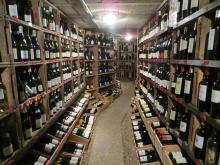
In this course we will explore the various ways in which gastronomy, the culture of food and wine as well as terroir, inform the construction of French and Francophone identity. This will include studying cultural objects, foodways, events and organizations that will aid in our interrogation of who has the right to determine the degree of authenticity or Frenchness. With our readings, films and videos as well as cultural objects we will develop our minds and palates while discussing how food and drink inform culture and personal history. Our graded tasks of writing, listening, speaking and audio recording will allow students to develop French language and cultural skills. These tasks and projects will also allow students to develop skills that can be used later in personal and professional opportunities. Overall, the course both solidifies and diversifies B2 proficiency on the CEFR scale, and prepares students for rigorous academic work in the French major and minor. Conducted in French. Prerequisite: FRENCH 301/302.
FRENCH 472 A: Translation Theory and Practice (A&H)

FREN 472 “Translation Theory and Practice” is organized around the techniques, tools, and theories of translation. Techniques: We will focus on developing advanced translation skills by practicing what in French is called version (translating from another language into one’s native or primary second language; in our case, French to English) by working individually and in groups on literary, commercial, journalistic, and other types of texts. We will also practice subtitling audio-visual material. Tools: We explore the digital and analog resources used by professional translators. The rise of machine translation algorithms (GoogleTranslate, DeepL, etc.) also provides an opportunity to reflect both on their utility and the broader social implications of their use. Theories: Particularly in the second half of the quarter, we will engage with translation theory that tackles the problem of translating the countless cultural differences embedded in language and the issues of originality, authorship, and the “ownership” of the translated text. Prerequisite of 2 of the following courses: FRENCH 301, FRENCH 302, and/or FRENCH 303.
ITAL 260 A: Fashion, Nation, and Culture (A&H, SSc)
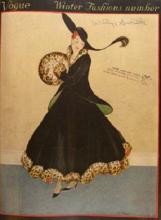
This course provides a broad introduction to Italian culture by examining the category “fashion” —beginning with late medieval livery, and the Renaissance emphasis on adapting one’s clothes, speech and personal style to the occasion. The early modern emphasis on manners, and the plethora of “how-to” manuals, corresponded with a growing identification of “dressing up” with effeminacy. We will examine the problem of gender and consumption, so as to contextualize the English adoption of the three-piece suit as modest masculine attire. We will also consider the role of clothing in constructing Italian, French, and American national identity. In this light, students will study both the post-war Italian idealization of American culture, and American idealization of Italian fashion.
ITAL 475 A: Italian Fascism (A&H, SSc)
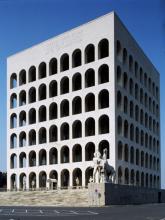
What are fascism, populism, and authoritarianism? How are these categories relevant today? This course explores the origins and development of fascism in Italy from the late 19th century to today. We will examine the rhetoric of texts and artistic production to ask:
What did fascism initially offer, and why was it so popular? How and why did those early objectives evolve across the 1920s and 1930s? Mussolini’s boasted that his government was “totalitarian,” meaning that the State’s authority was supreme and unquestioned. To what extent was this true?
Today, Italy’s prime minister is considered a political descendant of the fascists. To what extent does this fascist history play out in her rhetoric and policy?